Fragments of Silence
Date
December 2, 2025
Still movements
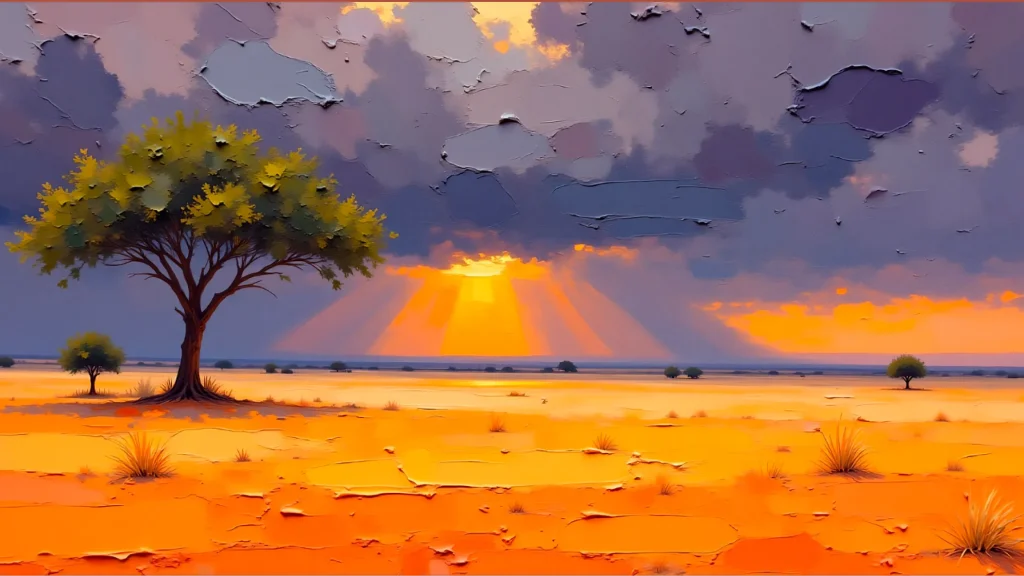
These works explore how movement can exist inside quietness. I’m interested in the subtle shifts that happen beneath routine, beneath language, beneath the obvious events of life. Everyday life is filled with these almost invisible movements: a mood changing without a clear cause, a memory surfacing while walking, a sense of closeness or distance forming inside an ordinary moment. Painting becomes a way to slow perception down enough to notice what is quietly unfolding.
I work through atmosphere rather than narrative. Instead of building a story with clear events, I build a field of sensation. The paintings are shaped to feel like fragments of a larger inner world, where memory, environment, and emotion overlap without hierarchy. They try to hold the silent drama of the in-between: the moment after an encounter, the expectation before a change, the gentle drift of thought.
Rather than offering certainty, I want the work to offer space—space to pause, to feel, and to recognize something that may not yet have words.
The tension between NOISE and SILENCE
My recent focus is the fragile line between overwhelm and calm. Silence, for me, is not a lack of energy but a form of clarity, a moment where emotion can settle into shape. Noise is not only sound; it is density—layers of thought, movement, information, expectation, and fatigue. Modern life asks us to live inside that density constantly. These paintings try to hold both silence and noise in the same frame, because they coexist within the body.
I’m fascinated by how this influence happens without permission or clear awareness. A city can hold you gently or exhaust you slowly. It can create comfort through familiarity, or anxiety through overload. Its tempo affects our breath, its textures affect our senses, and its memories attach themselves to particular corners of our lives. Sometimes we carry a place inside us long after we have left it, and sometimes we don’t realize how deeply we belong to a place until we are no longer there. My work reflects this intimacy between environment and emotion, where space is always shaping the inner life—softly or violently, visibly or invisibly—even when we think we are moving through it untouched. In painting, I try to trace that relationship: not the city as an object, but the city as a feeling that lives in us.
LIGHT as LANGUAGE
Light becomes a voice within my work. It isn’t only something that allows forms to be seen; it is something that speaks. It carries mood, rhythm, and intimacy the way a tone of voice carries meaning beyond words. I am drawn to light because it can change a space without changing its structure. The same room can feel safe or unfamiliar depending on how it is lit. A street can feel open, tender, or threatening simply through the shift of brightness, shadow, or color temperature. Light has the power to hold quietness, to suggest warmth, to create distance, or to make something feel suddenly close.
What fascinates me most is the double nature of illumination. Light reveals, but it also conceals. It can clarify a surface while leaving another part hidden. It can soften edges into calmness, or sharpen them into tension. It can create a sense of exposure, or a sense of protection. Sometimes it feels like memory itself—coming in fragments, highlighting certain details while letting others dissolve. Even when nothing moves physically, light is always moving: sliding, fading, reappearing, shifting direction. That constant drift gives it an emotional life.